Before we touch a windshield, bumper, or mirror, our Medford technicians need to know exactly which safety systems are on your vehicle. That is where ADAS calibration requirements come in: the specific camera, radar, and sensor procedures your manufacturer requires after a repair. We find them with a Revv VIN scrub, and here is how it works.
Revv is the calibration platform we use on every job at Precision ADAS & Glass on Automation Way in Medford. It turns a 17-character VIN into a vehicle-specific list of systems and OEM procedures, so nothing gets guessed at, skipped, or discovered after your car is already back on I-5.
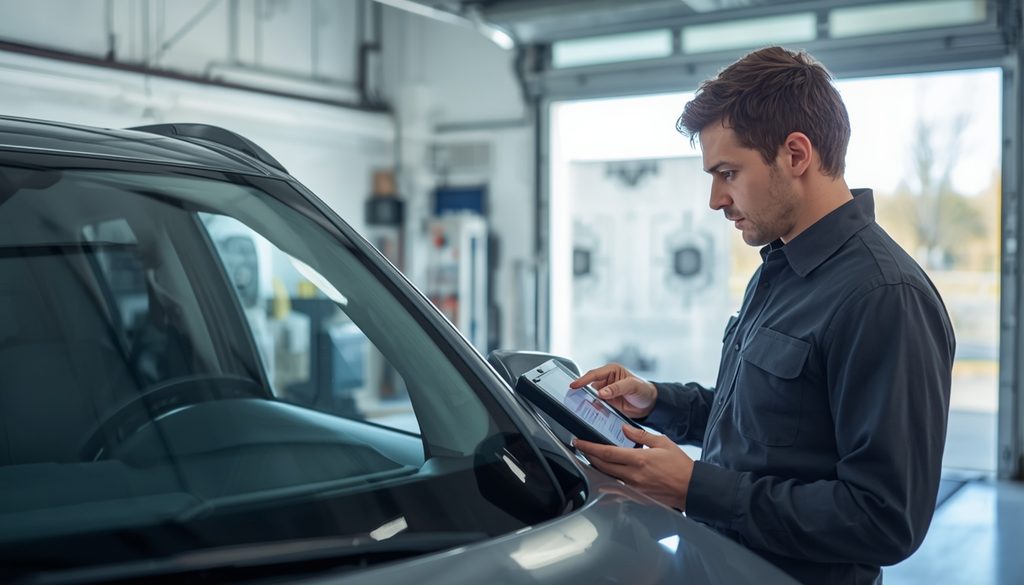
What Is a Revv VIN Scrub?
A Revv VIN scrub is a vehicle-specific report built from your 17-character VIN. It identifies the cameras, radar units, and sensors installed on your exact trim, then lists the calibrations and OEM procedures the manufacturer requires after work like windshield replacement, bumper repair, or a wheel alignment. It replaces guesswork with documented requirements.
Two vehicles that look identical in a parking lot can carry very different equipment. One trim might have a single forward camera, while another adds front radar, blind-spot sensors in the rear bumper, and a surround-view camera system. Running the VIN tells us which version is in our bay before the old glass comes out.
Revv works from manufacturer repair information, so the report reflects what the automaker says is required rather than a rule of thumb. It also becomes the first page of the documentation we hand back to you or your body shop when the job is done.
Why Glass and Bumper Work Triggers Hidden Calibrations
Most driver-assist cameras are mounted to the windshield, and many radar and blind-spot sensors sit behind bumper covers or grilles. Replacing glass or repairing a bumper changes the exact position those sensors see from, even by a fraction of a degree. Manufacturers typically require recalibration so lane-keeping, adaptive cruise, and automatic emergency braking aim where they should.
A camera that sits slightly off its intended angle can place lane lines and the vehicle ahead in the wrong spot. That is not something you notice backing out of the driveway. It shows up at highway speed, when the system is making decisions for you.
This is also why a minor collision deserves a closer look. A cracked bumper cover, a replaced side mirror, or a new grille can sit right on top of a sensor, and the Revv report flags which systems are affected by the parts on your repair. The scale of the issue is real: Revv’s 2026 research with roughly 300 shops found that about 65 percent of repairs require at least one calibration, as reported by FenderBender.
How the Revv Report Fits Our Four-Step Process
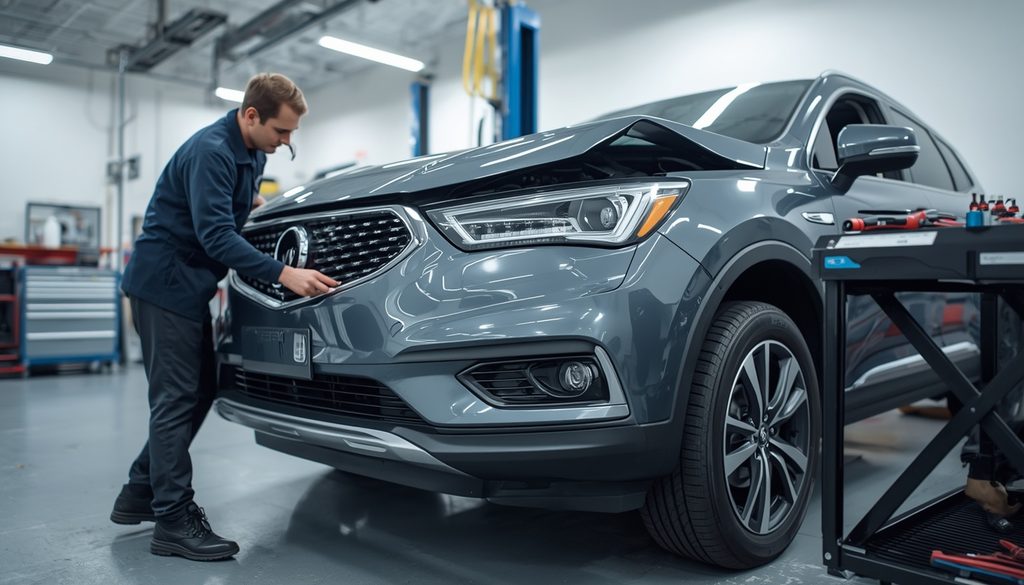
At our Medford shop, the Revv VIN scrub is step one. Next, an Astech OEM pre-scan records existing fault codes. Then we calibrate with Snap-on TruePoint 3D targets in a level-plane bay, static or dynamic as required. Finally, a post-scan confirms zero fault codes and you receive the full documentation package.
Each step answers a different question. Revv answers what the vehicle needs. The Astech pre-scan answers what was already wrong before we started, so an old fault code never gets blamed on new glass. TruePoint answers whether the sensors are aimed to OEM spec, placed within millimeters instead of by tape measure. The post-scan answers whether every system came back clean.
You can read more about our equipment and the difference between static and dynamic calibration on our ADAS calibration in Medford page.
Why It Matters on Southern Oregon Roads
Southern Oregon driving puts driver-assist systems to work. Interstate 5 climbs over the Siskiyou Pass, Highway 62 runs toward Crater Lake, and Highway 140 crosses to Klamath Falls. Gravel trucks, winter sanding, and long highway miles mean chipped windshields, and every replacement on a camera-equipped car brings its own ADAS calibration requirements.
Adaptive cruise and lane-keeping get heavy use on the I-5 stretch between Grants Pass, Medford, and Ashland, and that is exactly where a miscalibrated camera matters most. If you cannot bring the vehicle to us, our mobile ADAS calibration service covers Southern Oregon.
Some static calibrations still need our level-plane bay, because many systems cannot be calibrated correctly in a sloped parking lot. The Revv report shows which calibration types your vehicle requires, which tells us up front whether the job can be done on-site. Check our service area for the communities we cover.
What Medford-Area Body Shops Get With Every Sublet
Medford-area collision shops send us calibration work as a sublet, and every job comes back with the same documentation package: the Revv VIN scrub report, the TruePoint 3D alignment report, Astech pre- and post-scans, and a calibration certificate. That paperwork shows the repair followed OEM procedures from estimate to delivery.
Calibration identification is moving into the estimate itself. Estimating platforms are adding OEM calibration procedures directly to the repair plan, and Revv integrates with the major estimating systems, so the requirements we find line up with the repair plan your estimator built. For shops without an in-house ADAS department, one call covers identification, calibration, and proof of the work.
We also handle windshield replacement in Medford for vehicles that need glass and calibration together, with the VIN scrub run before the old windshield is removed.
Have a chip turning into a crack, or a repair that touched a sensor? Call (541) 500-9153 or contact our Medford shop at 943 Automation Way Suite L, open Monday through Friday from 8 a.m. to 5 p.m. We will run your VIN and tell you exactly what your vehicle needs before any work begins.
Revv VIN Scrub FAQ
What is a Revv VIN scrub?
It is a report generated from your vehicle’s VIN that lists the ADAS cameras, radar, and sensors installed on your exact trim, along with the calibrations and OEM procedures the manufacturer requires after repairs. We run one on every vehicle before work starts.
Does every windshield replacement need ADAS calibration?
Not every vehicle, but most vehicles with a windshield-mounted forward camera require calibration after the glass is replaced. The Revv VIN scrub confirms the requirement for your specific vehicle, so a needed calibration is never skipped and an unneeded one is never added.
Can you calibrate my vehicle at my home or business?
Mobile service is available throughout Southern Oregon. Some static calibrations require the level-plane bay at our Medford shop on Automation Way. The Revv report shows which calibration types your vehicle needs, so we can tell you up front whether the job can be done on-site.
What documentation will I receive after calibration?
Every job includes the Revv VIN scrub report, a Snap-on TruePoint 3D alignment report, Astech pre- and post-scans confirming zero fault codes, and a calibration certificate. Body shops and fleet managers use this package to show the repair followed OEM procedures.
Do you calibrate Subaru EyeSight systems?
Yes. Precision ADAS & Glass is a Subaru Certified calibration center, and we calibrate the EyeSight stereo camera system after windshield replacement and collision repair. The Revv report and Astech scans document every step.